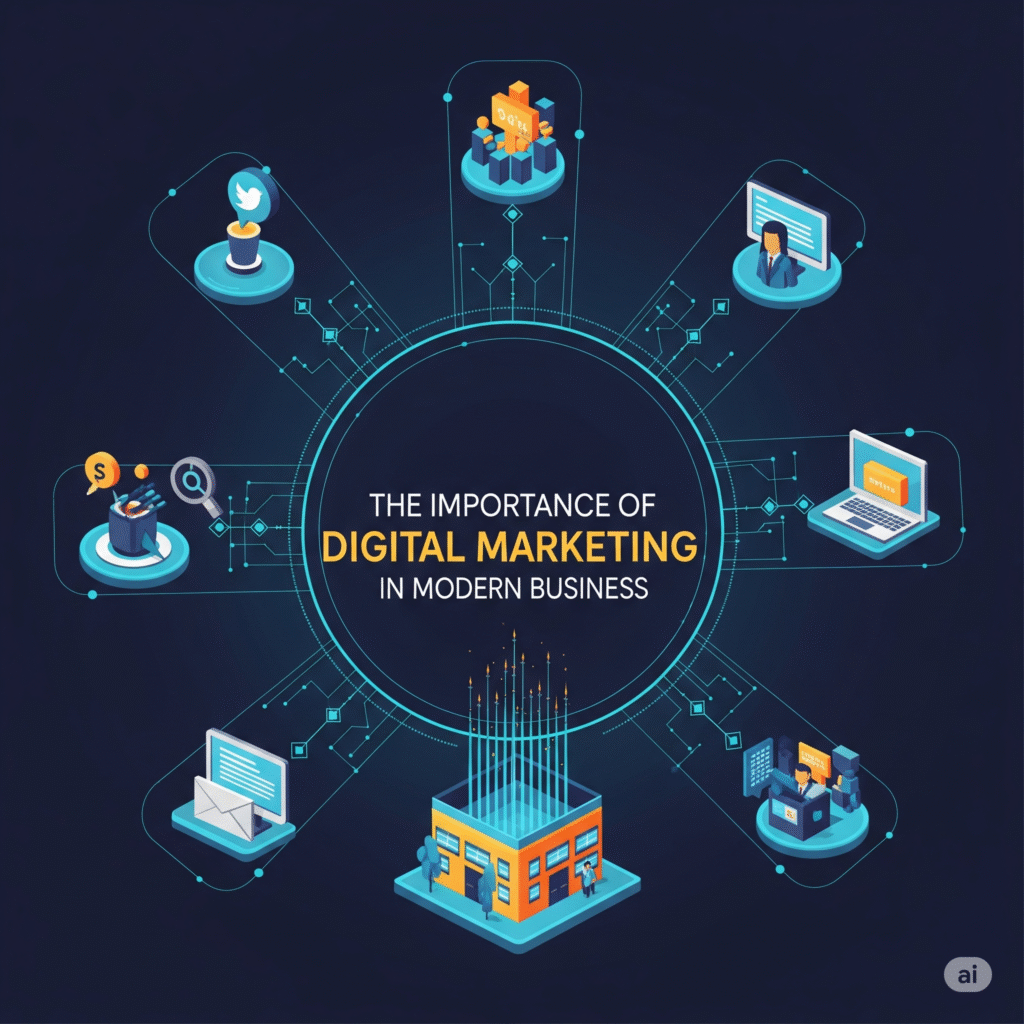
In today’s fast-paced digital age, marketing has taken a revolutionary shift from traditional methods to dynamic digital strategies. Digital marketing has become an essential tool for businesses of all sizes to reach, engage, and convert their target audiences effectively. As consumer behavior evolves with technology, modern businesses must embrace digital marketing to stay competitive and grow.
1. Wider Reach and Global Audience
One of the most significant advantages of digital marketing is its ability to reach a global audience. With platforms like social media, search engines, and email, businesses can promote their products or services to people across the world. Unlike traditional marketing, digital strategies are not limited by geography or time zones, making it easier for businesses to scale quickly.
2. Cost-Effective and High ROI
Digital marketing is more cost-effective than traditional advertising methods like print or TV ads. Tools such as Google Ads, Facebook Ads, and SEO allow businesses to target specific audiences, minimizing waste and maximizing returns. Even small businesses with limited budgets can compete with larger competitors through smart digital strategies.
3. Real-Time Analytics and Measurable Results
Digital marketing allows businesses to track and analyze performance in real time. Metrics such as website traffic, click-through rates, conversion rates, and customer engagement help marketers make informed decisions. This data-driven approach leads to better optimization and improved campaign performance.
4. Personalized Customer Experience
Through digital channels, businesses can deliver personalized content based on customer preferences and behavior. Email marketing, for example, can be tailored to individual interests, while social media platforms offer targeted advertising options. This personalized experience builds trust and fosters long-term customer relationships.
5. Enhanced Engagement and Brand Loyalty
Social media and content marketing provide opportunities for brands to interact directly with customers, respond to queries, and create meaningful conversations. These interactions increase customer satisfaction, build brand loyalty, and help businesses develop a strong online community.
6. Adapting to Changing Consumer Behavior
Consumers today rely heavily on the internet to research products and make buying decisions. A strong digital presence—through websites, reviews, and online visibility—builds credibility and helps businesses influence potential customers at every stage of the buying journey.
Conclusion
Digital marketing is no longer optional; it is a necessity for modern businesses. Whether you’re a startup, a growing brand, or an established company, embracing digital marketing strategies can lead to greater visibility, increased sales, and long-term success. As technology continues to evolve, the businesses that stay ahead of digital trends will be the ones that thrive in the future.